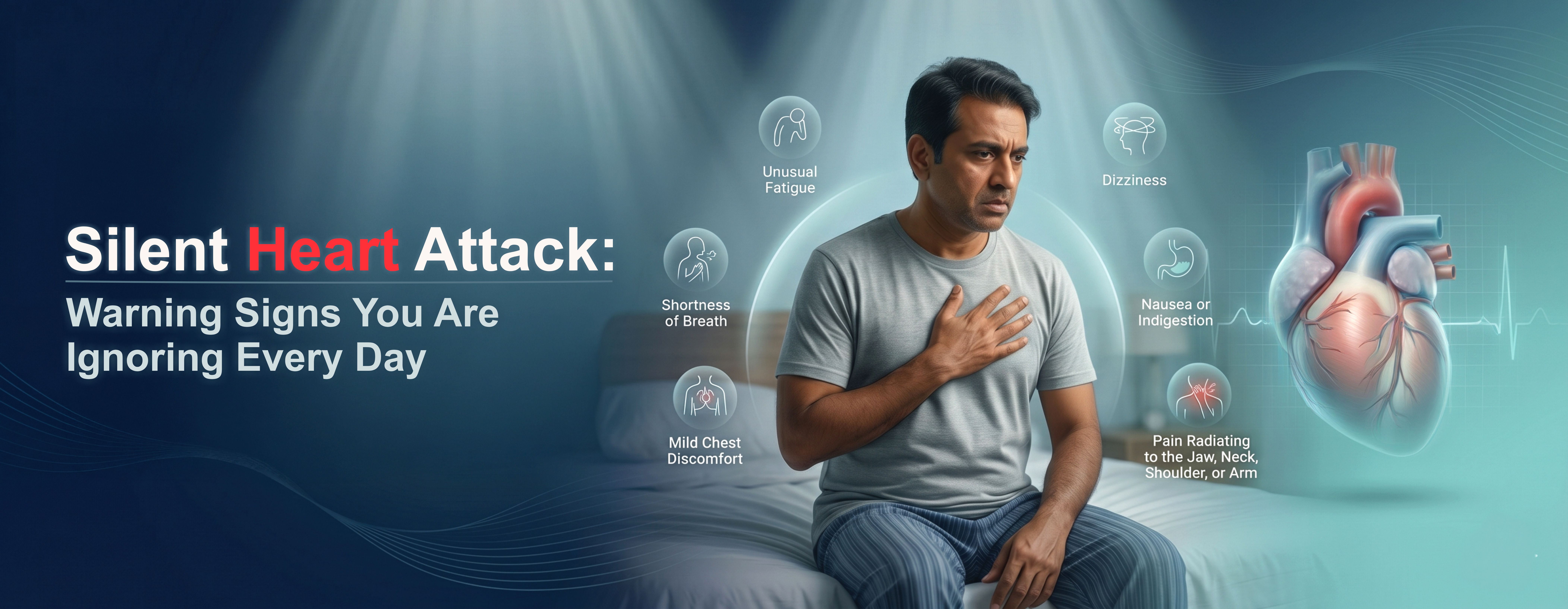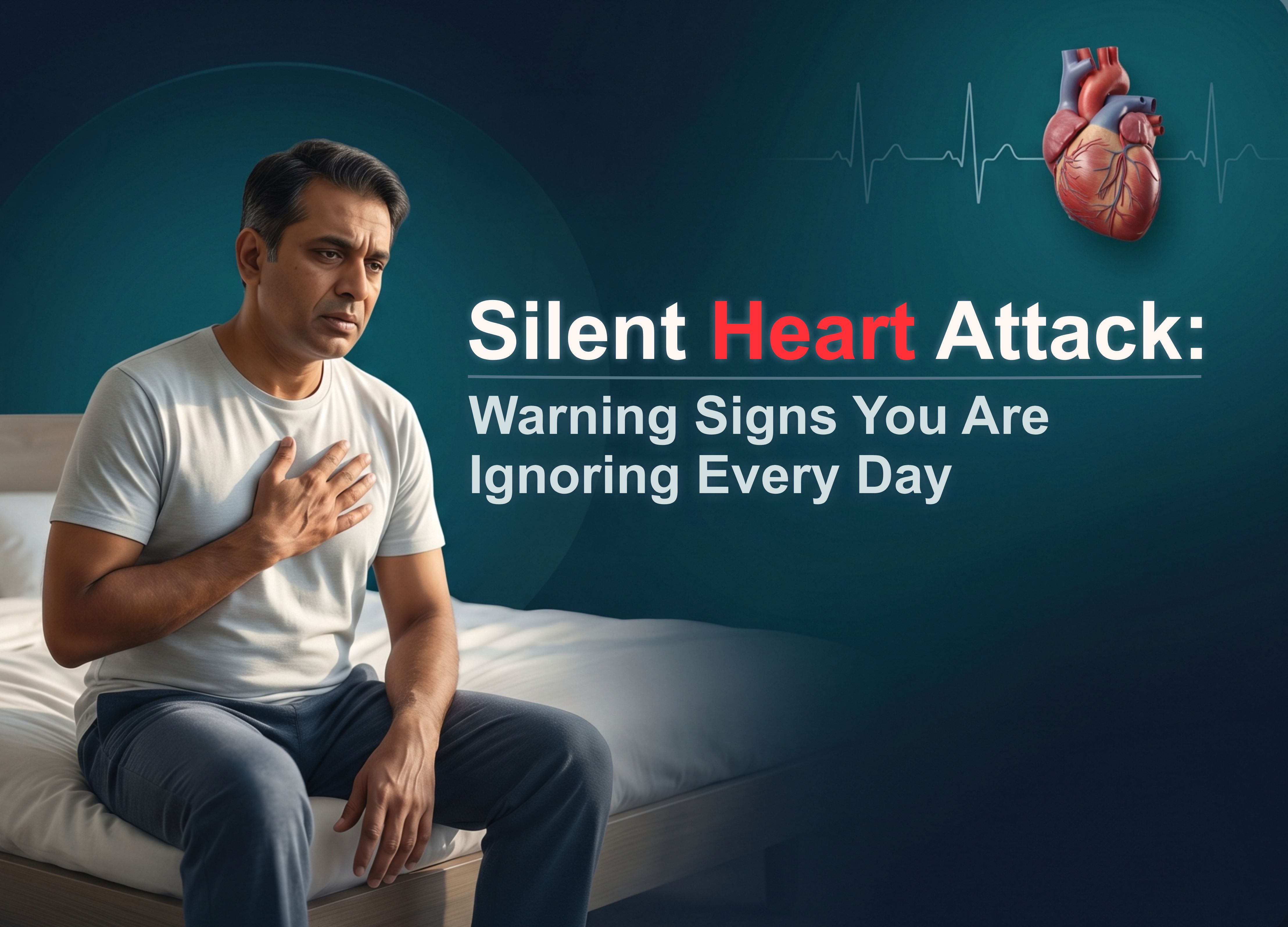
Nearly 45% of all heart attacks happen silently. No dramatic chest pain. Just subtle signals your body sent — that went unheard.
When most people think of a heart attack, they picture a dramatic scene — crushing chest pain, a person clutching their left arm, collapsing to the floor. But for a startling number of people, a heart attack looks nothing like this.
A Silent Heart Attack — medically termed a Silent Myocardial Infarction (SMI) — occurs when the blood supply to part of the heart muscle is suddenly blocked, causing damage, but without producing the classic symptoms that prompt a person to seek emergency care. The heart attack happens. The damage is real. But the warning signs are so subtle that most people never realise what has occurred.
A silent heart attack is not a minor event. The cardiac muscle damage it causes is just as real, just as permanent, and just as dangerous as a classic heart attack. People who survive a silent heart attack without diagnosis are at significantly elevated risk of a subsequent — often larger and potentially fatal — cardiac event, because the underlying causes have gone entirely unaddressed.
Research published in the Journal of the American Medical Association (JAMA) found that approximately 45% of all heart attacks are silent — meaning nearly half of all people who experience a heart attack do not receive timely treatment because they did not recognise what was happening.
Read More: Silent Warning Signs of Kidney Disease Most People Ignore Until It's Too Late
| Statistic/Fact | Details |
| Silent Heart Attack Share | Approximately 45% of all heart attacks occur silently, without classic chest pain symptoms. |
| India's Cardiac Burden | India accounts for nearly 60% of the world's heart disease burden. |
| Young Adults at Risk | Heart attacks among Indians aged 25–40 years have increased by over 50% in the past decade. |
| Women & Silent Heart Attacks | Women are more likely than men to experience silent or atypical heart attacks. |
| Golden Hour | Receiving treatment within 90 minutes can reduce mortality by up to 50%. |
| Leading Cause of Death | Cardiovascular diseases claim over 28 lakh lives annually in India. |
| Preventable Cases | Up to 80% of premature heart attacks can be prevented through healthy lifestyle changes. |
| TMU Hospital Emergency | 24×7 Cardiac Emergency Services | Advanced Angioplasty & ICCU Facilities | Helpline: 1800-570-6768 |
The following warning signs are routinely dismissed, misattributed to other causes, or simply overlooked. Each one in isolation may seem harmless. Together — or when persistent — they can represent your heart sending an urgent distress signal.
45% of all heart attacks occur without classic chest pain. Knowing these subtle signals can be the difference between early intervention and a fatal second event.
Feeling unusually tired — exhausted after activities that previously caused no difficulty, or waking after a full night of sleep, still feeling drained — is one of the most commonly reported precursors to a heart attack, especially in women.
This happens because a partially blocked coronary artery forces the heart to work significantly harder to maintain circulation. The body compensates by diverting blood away from nonessential functions, leaving you feeling profoundly fatigued for no obvious reason.
Do not dismiss it as overwork, stress, low vitamin levels, or 'just getting older.'
Silent heart attack chest discomfort is often described not as sharp, crushing pain, but as a vague heaviness, pressure, squeezing, or fullness in the centre of the chest. It may last only a few minutes and then fade, leading most people to conclude it was nothing.
Some describe it as feeling like a heavy object placed on the chest, or like 'something is not quite right.' It may come and go over days or weeks. Any persistent or recurring chest pressure — however mild — warrants immediate cardiac evaluation.
Do not dismiss it as muscle strain, poor posture, or anxiety.
Feeling breathless while doing simple tasks – climbing a single flight of stairs, walking to the kitchen, or even while sitting still – is a significant cardiac warning sign. When the heart is struggling to pump efficiently, fluid can accumulate in the lungs, making breathing laboured.
Many people notice they are taking more frequent deep breaths, feeling unable to 'get enough air,' or becoming breathless far more quickly than usual during mild activity.
Do not dismiss it as being out of shape, asthma, or anxiety.
Cardiac pain does not always stay in the chest. The heart shares nerve pathways with the left arm, jaw, neck, upper back, and even the stomach. This referred pain means a heart attack can present as a dull ache in the left arm, jaw discomfort, a stiff neck, or upper back pain.
In women, particularly, pain in the jaw, neck, and back is a more prominent feature of heart attacks than chest pain. This atypical presentation is a primary reason why heart attacks in women are more frequently missed or delayed in diagnosis.
Do not dismiss it as a toothache, cervical spondylitis, or a pulled shoulder muscle.
The proximity of the heart and stomach, and their shared nerve supply, means that cardiac events frequently present as gastrointestinal symptoms — nausea, vomiting, a burning sensation in the upper abdomen, or persistent indigestion that does not respond to antacids.
This symptom is especially prevalent in women, leading to delayed diagnosis when a patient attributes the discomfort to gastritis or acid reflux. When nausea or indigestion occurs alongside any other symptom on this list, it must be taken seriously.
Do not dismiss it as spicy food, acidity, or a stomach infection.
Awareness of your own heartbeat — particularly sensations of the heart racing, fluttering, skipping beats, or pounding — can indicate an arrhythmia triggered by compromised cardiac tissue. When the heart muscle is damaged or deprived of oxygen, its electrical conduction system can be disrupted.
Frequent, prolonged, or worsening palpitations — particularly when accompanied by dizziness or breathlessness — require prompt medical evaluation.
Do not dismiss it as too much coffee, anxiety, or stress.
Read More: Screen Time Is Stealing Your Eyesight
Many silent heart attack survivors describe a profound sense of impending doom or an inexplicable feeling that something is seriously wrong — even without being able to point to a specific physical symptom. This is a recognised cardiac warning signal that doctors take seriously.
The body's physiological stress response to compromised cardiac function can manifest psychologically as intense anxiety, restlessness, or a sense of dread. If you experience this sensation — especially alongside any other symptom — do not dismiss it and do not wait.
Do not dismiss it as an anxiety disorder, overthinking, or irrational fear.
No single symptom is a definitive sign of a silent heart attack in isolation. However, when two or more symptoms occur together — or when any one persists, recurs, or worsens over days — it demands immediate medical evaluation. Time is the heart muscle. Every minute of delay increases the extent of irreversible cardiac damage.
| Feature | Classic Heart Attack | Silent Heart Attack |
| Chest Pain | Severe, crushing, and unmistakable chest pain | Absent, mild, or brief pressure/discomfort |
| Symptom Awareness | The patient usually recognises a serious medical emergency | Symptoms are often ignored or mistaken for minor ailments |
| Typical Presentation | Chest pain, left arm pain, sweating, and distress | Fatigue, nausea, jaw or back pain, breathlessness, indigestion-like symptoms |
| More Common In | Men and individuals with a classic high-risk profile | Women, older adults, and people with diabetes |
| Emergency Response Rate | High; patients typically seek immediate medical attention | Low; many patients delay or avoid seeking care |
| Heart Muscle Damage | Significant damage that is recognised and treated promptly | Equally significant damage, often detected later through ECG or Echocardiography |
| Risk of Second Event | Reduced with timely diagnosis and treatment | Higher due to delayed diagnosis and untreated underlying disease |
| Diagnosis | Usually identified during the acute event | Often discovered weeks, months, or years later during routine cardiac testing |
| Treatment Outcome | Better outcomes when treated quickly | Greater risk of complications because treatment is delayed |
Heart disease in India is no longer a condition of old age. A disturbing trend has emerged over the past decade: Indians in their 20s, 30s, and early 40s are experiencing heart attacks — and dying from them — at rates unprecedented in previous generations.
50% Rise in silent heart attacks among Indians aged 25–40 over the past decade, driven by a convergence of lifestyle, metabolic, and genetic factors.
South Asians develop cardiovascular disease at a younger age, at a lower body weight, and at lower cholesterol levels than Western populations. Standard global risk assessment tools may significantly underestimate cardiac risk in Indian patients—making regular specialised screening essential.
If you fall into any of the following categories, proactive cardiac screening is not optional — it is essential.
| Risk Factor | Why It Increases Silent Heart Attack Risk |
| Diabetes (Type 1 or Type 2) | Diabetic neuropathy can reduce pain perception, making heart attack symptoms less noticeable or completely silent. |
| Hypertension (High Blood Pressure) | Long-term high blood pressure damages blood vessels and accelerates coronary artery disease. |
| High Cholesterol / Dyslipidaemia | Excess LDL cholesterol contributes to plaque buildup, narrowing coronary arteries and restricting blood flow. |
| Abdominal Obesity | Central obesity promotes insulin resistance, chronic inflammation, and abnormal lipid levels, increasing cardiovascular risk. |
| Family History of Heart Disease | A first-degree relative with early-onset heart disease significantly raises an individual's risk. |
| Smoking & Tobacco Use | Tobacco damages blood vessels, accelerates plaque formation, and increases the risk of coronary artery blockage and spasm. |
| Post-Menopausal Women | Reduced estrogen levels after menopause diminish natural cardiovascular protection and may lead to atypical symptoms. |
| Chronic Stress & Poor Sleep | Elevated stress hormones increase inflammation, blood pressure, and the likelihood of cardiac events. |
| Sedentary Lifestyle | Lack of regular physical activity contributes to obesity, hypertension, diabetes, and poor heart health. |
| Previous Heart Attack or Angina | A history of cardiovascular disease substantially increases the risk of future silent or symptomatic heart attacks. |
| Unhealthy Diet | Diets high in saturated fats, trans fats, salt, and processed foods contribute to obesity, hypertension, and atherosclerosis. |
| Excessive Alcohol Consumption | Heavy alcohol intake can raise blood pressure, disrupt heart rhythm, and increase cardiovascular risk. |
If you or someone near you experiences a combination of the symptoms described above, the following steps can save a life. Every minute without treatment, approximately 2 million heart muscle cells die.
Call Emergency Services FIRST — Do Not Drive Yourself
The single most important action is to call for emergency medical assistance immediately. Do not attempt to drive yourself to the hospital. Ambulance teams can begin life-saving treatment en route. TMU Hospital Emergency: 1800-570-6768
Treating a silent heart attack within 90 minutes of symptom onset — the clinical 'door-to-balloon' target — reduces mortality by up to 50%. TMU Hospital's Cardiology Department is equipped for emergency angioplasty 24 hours a day, 7 days a week.
A silent heart attack can be detected — sometimes weeks or months after it occurred — through a range of diagnostic tests. Many people discover they have had a heart attack only during a routine check-up, underscoring the importance of regular cardiac screening.
An ECG records the electrical activity of the heart and is the most immediate diagnostic tool for identifying a heart attack. Characteristic changes — particularly ST-segment changes, T-wave inversions, or pathological Q-waves — indicate current or past myocardial injury. An ECG can detect evidence of a silent heart attack that occurred in the past, even if the patient never experienced recognisable symptoms.
An echocardiogram uses ultrasound to produce real-time images of the heart in motion. It assesses the ejection fraction, wall motion abnormalities, and structural changes — all of which can reveal evidence of previous myocardial infarction.
When heart muscle cells die during a heart attack, they release specific proteins into the bloodstream. Troponin I and Troponin T are the most sensitive and specific cardiac biomarkers available — elevated levels confirm myocardial damage, even in patients without chest pain.
Coronary angiography involves injecting contrast dye into the coronary arteries under X-ray guidance to visualise blockages or narrowing directly. It is the gold-standard diagnostic procedure for coronary artery disease and is performed in TMU Hospital's Cardiac Catheterisation Laboratory (Cath Lab).
A treadmill stress test monitors heart rhythm, blood pressure, and ECG changes during controlled, graded physical exercise. It can reveal hidden ischaemia — reduced blood flow to the heart — that is not apparent at rest, making it valuable for identifying patients at risk before a heart attack occurs.
A non-invasive imaging technique that uses CT scanning to visualise the coronary arteries and detect calcium deposits within arterial plaque — an early marker of atherosclerosis and future cardiac event risk.
ECG, 2D Echocardiography, Cardiac Biomarker testing, Coronary Angiography, Treadmill Stress Test, and Cardiac CT are all available at TMU Hospital's Department of Cardiology, Moradabad. Early detection saves lives — and saves costs.
Up to 80% of premature heart attacks are preventable through lifestyle modification. The following measures are clinically evidence-based interventions that directly reduce cardiac risk.
The Department of Cardiology at TMU Hospital provides a comprehensive spectrum of cardiac care — from early-risk screening and preventive cardiology to emergency intervention and long-term cardiac rehabilitation.
Protect Your Heart — Before It's Too Late. Do not wait for symptoms. A single cardiac screening appointment at TMU Hospital can identify hidden risks and give you a clear, evidence-based plan for heart health protection.
Call: 1800-570-6768 | www.tmuhospital.com | NH-09, Delhi Road, Moradabad – 244001, UP
A silent heart attack does not give you the dramatic warning that Hollywood has taught you to expect. It gives you fatigue that you blame on your workload. A heaviness in your chest that you blame on stress. A jaw ache you blame on a dental problem. Breathlessness, you blame on not exercising enough.
These are not trivial complaints. They are your heart asking for help — quietly, persistently, and urgently. And the moment you stop dismissing them and seek evaluation is the moment that could save your life.
The evidence is unequivocal: heart disease detected early is heart disease managed effectively. A simple ECG, a blood test, and a conversation with a cardiologist can reveal risks that have been silently building for years — and give you the tools to address them before they become a crisis.
At TMU Hospital, our Department of Cardiology provides world-class cardiac care — from preventive screening and early diagnosis to emergency intervention and long-term rehabilitation — all under one roof, accessible to every patient, every hour of the day.
Your heart works every second of every day to keep you alive. Give it the attention it deserves — today, not tomorrow.
Q1. Can a silent heart attack happen without any symptoms at all?
Ans. Yes — by definition, a silent heart attack produces no symptoms dramatic enough to prompt the patient to seek emergency care. However, most survivors, on reflection, recall subtle signs they dismissed: unusual fatigue, mild breathlessness, brief jaw or back discomfort, or a vague sense that something was 'off.' The absence of classic chest pain does not mean the absence of all warning signals.
Q2. How is a past silent heart attack discovered?
Ans. Many people discover they have had a silent heart attack during a routine ECG or echocardiogram performed for an unrelated reason, such as a pre-operative check-up or a routine health screening. Characteristic changes on the ECG (pathological Q-waves) or wall motion abnormalities on echocardiography can reveal evidence of previous myocardial infarction, sometimes years after the event.
Q3. Are women at greater risk of a silent heart attack than men?
Ans. Yes. Women are significantly more likely to experience heart attacks with atypical or absent chest pain — presenting instead with fatigue, jaw pain, nausea, back pain, and breathlessness. This atypical presentation means heart attacks in women are more frequently missed or delayed in diagnosis. Women with risk factors — particularly diabetes, hypertension, and a family history — should be proactive about cardiac screening.
Q4. Can a young, fit person have a silent heart attack?
Ans. Yes — and this misconception is one of the most dangerous cardiac myths. Physical fitness reduces cardiac risk but does not eliminate it entirely, particularly in individuals with genetic predispositions, high-stress lifestyles, undetected hypertension, or elevated inflammatory markers. India has seen a marked rise in heart attacks among individuals aged 25–40 over the past decade. Youth and perceived fitness are not cardiac protection guarantees.
Q5. What is the difference between a silent heart attack and cardiac arrest?
Ans. A silent heart attack is primarily a plumbing problem — a blocked artery prevents blood from reaching part of the heart muscle, causing it to die. The heart continues to beat but is damaged. A cardiac arrest is primarily an electrical problem — the heart's electrical system malfunctions and the heart suddenly stops beating altogether, causing immediate loss of consciousness and death within minutes without CPR. A silent heart attack can trigger a cardiac arrest, but they are distinct events requiring different responses.
Q6. How often should I get a cardiac check-up?
Ans. For adults above 30 with no known risk factors, an annual cardiac check-up — including blood pressure, fasting lipid profile, blood glucose, and a resting ECG — is prudent. For individuals with diabetes, hypertension, a family history of heart disease, obesity, or tobacco use, more frequent monitoring and specialist review is recommended regardless of age. TMU Hospital's cardiology outpatient clinic provides comprehensive cardiac risk assessment at affordable rates.
Cardio.jpg)
HOD
Department: Cardiology
Qualifications: MBBS, MD (Medicine), DM (Cardiology) <br>FSCAI (USA), FESC (Europe)
© TMU Hospital is Proudly Owned by TMU