
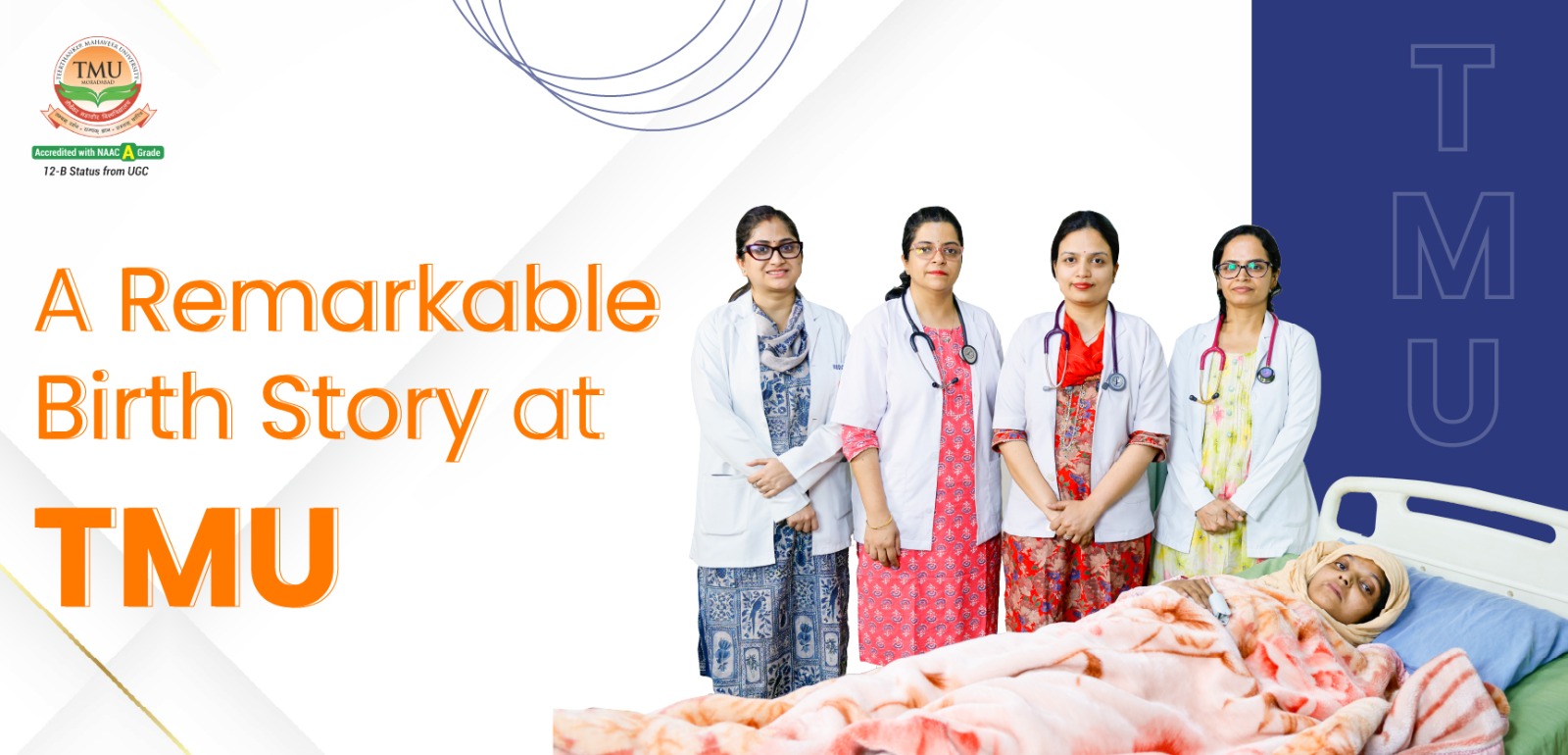
A rare and highly complicated high-risk pregnancy at TMU Hospital was successfully managed by a dedicated team of doctors, creating an extraordinary medical achievement. A woman from Obri village in Sambhal district safely delivered four babies, making the case both medically complex and highly uncommon. What made this case even more special was that all four babies were in separate sacs, and all deliveries were conducted through the normal delivery process.
According to the doctors, this type of pregnancy was extremely rare and medically challenging. The parents, Mohammad Aleem and his wife Amina, visited TMU Hospital regularly throughout the pregnancy for continuous monitoring and treatment.
Doctors said that during an ultrasound in the second month of pregnancy, it was discovered that Amina was carrying four babies. Since the pregnancy was highly sensitive, doctors initially advised fetal reduction to reduce complications. However, the family decided to continue the pregnancy with all four babies.
During the pregnancy, Amina faced several health complications, including liver-related issues and high blood pressure. Because of this, she was admitted to the hospital several times for treatment and observation. The family visited the hospital every 15 to 20 days for regular check-ups and medical care.
Hospital authorities stated that on May 8, Amina experienced labour pain and was admitted to the hospital. On May 9, she delivered the first baby, a boy, through normal delivery. The baby weighed around 710 grams at birth. Doctors managed to stabilise the condition and delayed the remaining deliveries because the pregnancy had reached only around six and a half to seven months.
A few days later, Amina again experienced labour pain and was rushed to TMU Hospital. Doctors successfully delivered three more babies, including one boy and two girls. Hospital authorities stated that all newborns were under continuous observation. Doctors informed that one baby is stable, while two require specialised neonatal care.
Mohammad Aleem, who runs a grocery store, thanked the doctors and staff at TMU Hospital for their dedication and care. He said that his family had complete trust in the hospital because his sister’s delivery had also been successfully handled there earlier.
Family members also appreciated the hospital’s timely treatment, continuous support, and quality care throughout the pregnancy. Imrana Parveen, the patient’s sister, praised the doctors and staff for their constant guidance and assistance during the difficult journey.
Doctors at TMU Hospital emphasised that pregnancies involving four babies carry serious risks for both the mother and newborns. However, with timely intervention and close monitoring, successful outcomes can still be achieved.
The successful delivery of four babies through normal delivery in such a rare and high-risk pregnancy highlights the expertise, dedication, and coordinated efforts of the medical team at TMU Hospital.
Doctors described the case as one of the rarest and most difficult pregnancies, as all four babies were delivered normally despite severe complications. This achievement reflects the expertise of the hospital’s medical team and their commitment to ensuring the safety of both the mother and the newborns in critical situations.
 TMU Hospital Uses Skit to Highlight ORS as a Lifes...
 TMU Cardiologist Saves Life Without Bypass Surgery...
 TMU Becomes North India’s First Medical College Ho...
© TMU Hospital is Proudly Owned by TMU