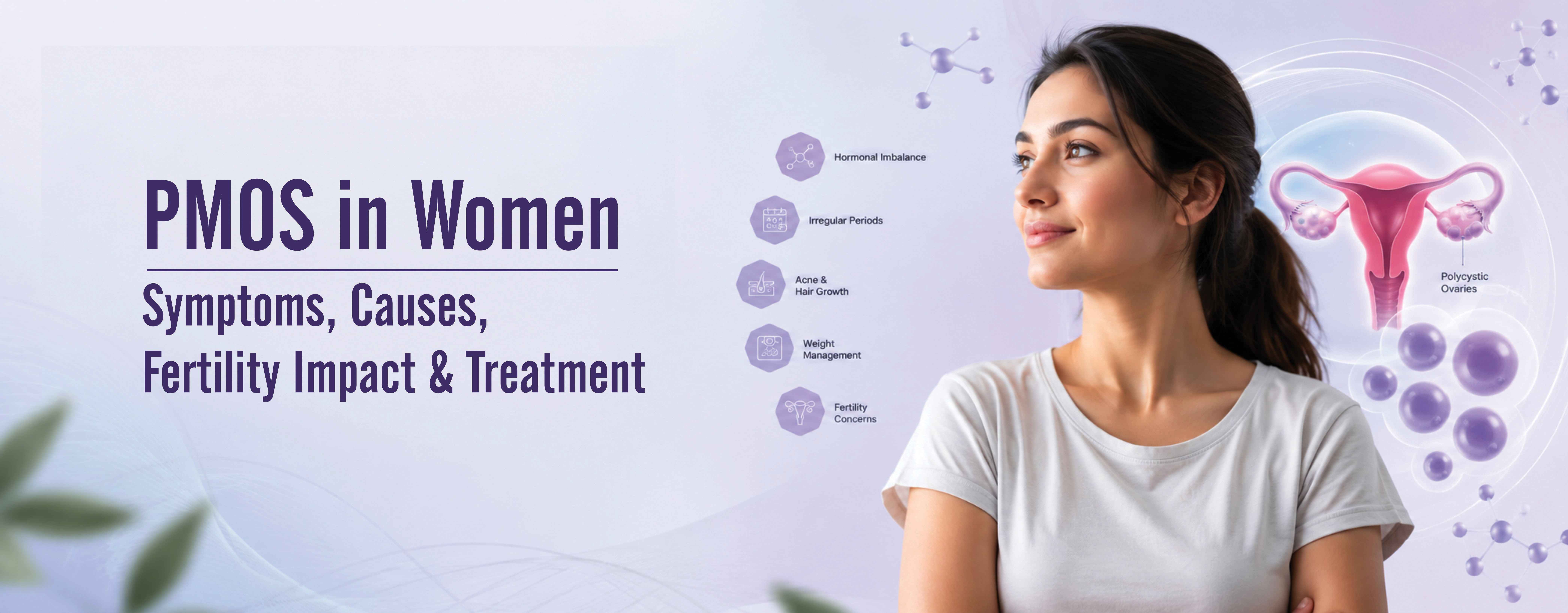
Polycystic Ovary Syndrome (PCOS) — increasingly referred to in recent medical literature as Polyendocrine Metabolic Ovarian Syndrome (PMOS) — is one of the most common hormonal disorders affecting women of reproductive age worldwide. It affects approximately 1 in 8 women in India, yet a significant proportion of cases remain undiagnosed for years.
PCOS is far more than a reproductive condition. It is a complex, multisystem disorder that involves endocrine, metabolic, psychological, and dermatological features. Women with PCOS often experience irregular periods, unexplained weight gain, acne, excessive hair growth, and difficulty conceiving — yet many attribute these signs to "normal stress" or "hormonal changes," delaying critical diagnosis and treatment.
The term "PCOS" (Polycystic Ovary Syndrome) refers only to one organ — the ovaries — and fails to capture the disorder's true multisystem nature. The newer term PMOS (Polyendocrine Metabolic Ovarian Syndrome) better reflects the hormonal, metabolic, and systemic involvement across multiple body systems.
This comprehensive guide by the expert team at TMU Hospital's Department of Obstetrics & Gynaecology explains everything you need to know about PCOS/PMOS — from its root causes and age-specific symptoms to fertility impact, dietary guidance, and the most effective treatment options available today.
PCOS is a complex hormonal disorder in which a woman's ovaries produce excess androgens (male hormones). This hormonal imbalance disrupts the normal process of ovulation, leading to a wide range of physical and metabolic symptoms.
The name "Polycystic" refers to the presence of multiple small, fluid-filled sacs (follicular cysts) on the ovaries that appear on ultrasound. However, it is important to note that not all women with PCOS develop visible cysts, and not all ovarian cysts indicate PCOS. A proper diagnosis requires a combination of clinical evaluation, hormonal blood tests, and ultrasound imaging.
PCOS affects 1 in 8 women in India. It is the leading cause of anovulatory infertility. It can present at any age after puberty and persists through a woman's reproductive years. Early diagnosis significantly improves long-term health outcomes.
PCOS in women develops through a cascade of hormonal and metabolic events. Understanding this chain helps clarify why weight management and lifestyle changes are so central to treatment.
| Root Cause | Mechanism | Resulting Symptom |
| Genetic predisposition | Cytochrome P450 enzyme defects → insulin signalling failure | Insulin resistance even in lean women |
| Obesity & sedentary lifestyle | Increased fat tissue → worsened insulin resistance | Weight gain, fatigue, metabolic syndrome |
| Hyperinsulinaemia | Excess insulin stimulates ovarian theca cells | Excess androgen production |
| Hyperandrogenaemia | Androgens suppress normal follicle maturation | Anovulation, hirsutism, acne, and infertility |
PCOS presents differently depending on a woman's age and individual hormonal profile. This variability is precisely why many women go undiagnosed for years — the symptoms they experience are attributed to other causes, such as stress or dietary habits.
Not all women with PCOS have the same set of symptoms. Some women are of normal body weight yet still have significant insulin resistance and hormonal imbalance — this is called Lean PCOS. If you experience any of the symptoms listed above persistently, a clinical evaluation is essential.
PCOS is the leading cause of anovulatory infertility in women — but it is also one of the most treatable. The key is early diagnosis and the right management approach.
The primary mechanism behind PCOS-related infertility is anovulation — the failure of the ovaries to release a mature egg during the menstrual cycle.
Clinical evidence consistently demonstrates that even a modest weight reduction of 5–10% of body weight can significantly restore ovulation and improve the chances of natural conception. Weight optimisation through lifestyle modifications — regular exercise and a balanced diet — reduces insulin resistance and helps restore natural hormonal balance.
After lifestyle modifications and targeted weight reduction, 20–40% of women with PCOS may conceive spontaneously, without requiring fertility medications. For those who do need medical support, highly effective treatments are available.
As per the ESHRE/ASRM 2023 International Guidelines, fertility treatment for PCOS follows a structured, stepwise approach — beginning with the least invasive options and progressing as needed.
| Treatment Line | Treatment | Details |
| First Line | Letrozole (recommended by ESHRE/ASRM 2023) | Preferred ovulation induction agent. Clomiphene citrate & metformin are also used in many countries (off-label). |
| Second Line | Injectable Gonadotrophins + Laparoscopic Ovarian Drilling (LOD) | LOD surgically reduces androgen production in the ovaries. Offered free of cost to eligible couples at TMU Infertility Clinic. |
| Third Line | In Vitro Fertilisation (IVF) | For severe, treatment-resistant cases. Available at TMU Hospital at affordable pricing. |
Lifestyle modification is the cornerstone of PCOS management – it is the most impactful first intervention regardless of whether a woman is trying to conceive or managing symptoms. Consistent, sustainable changes deliver the best long-term outcomes.
A Mediterranean-style, anti-inflammatory diet is the most evidence-backed dietary approach for PCOS. It:
| Food Group | Recommended Choices |
| Whole Grains | Oats, quinoa, brown rice, millets, whole wheat |
| Fruits & Vegetables | Leafy greens, berries, cruciferous vegetables (broccoli, cauliflower), citrus fruits |
| Legumes | Lentils, chickpeas, kidney beans, green moong |
| Healthy Fats | Olive oil, nuts (almonds, walnuts), seeds (flaxseed, chia), avocado |
| Lean Proteins | Fish (especially oily fish), eggs, tofu, low-fat dairy, legumes |
| Hydration | Water, herbal teas, coconut water, buttermilk (chaach) |
Consistent physical activity produces significant and sustainable improvements in PCOS management — even in the long term.
| Age Group | Goal | Recommended Activity Level |
| Adults (18–64 years) | General health maintenance | 150–300 min/week moderate-intensity OR 75–150 min/week vigorous-intensity aerobic activity |
| Adults (18–64 years) | Modest weight loss | Minimum 250 min/week moderate-intensity OR 150 min/week vigorous-intensity activity |
| Adolescents | Daily activity + bone & muscle strength | At least 60 min/day moderate-to-vigorous activity + muscle & bone strengthening at least 3 times/week |
A combination of aerobic exercise (brisk walking, cycling, and swimming) and strength training (resistance exercises) provides the greatest benefit for insulin sensitivity, weight management, and hormonal regulation in women with PCOS.
Medical treatment for PCOS in women is always tailored to each woman's primary concern — menstrual regulation, acne and hirsutism management, fertility, or metabolic health. Below are the evidence-based options recommended by current international guidelines.
COCPs are recommended for reproductive-age women and adolescents with PCOS for the management of:
Important consideration: Women with higher body weight and pre-existing cardiovascular risk factors require careful clinical evaluation before starting COCPs.
Metformin is recommended for adult women with PCOS and a BMI ≥ 25 kg/m² to address:
Starting at a low dose of 500 mg with gradual weekly increments of 500 mg, and using extended-release preparations, minimises gastrointestinal side effects and improves long-term adherence.
Anti-androgen medications are used for persistent hirsutism when COCPs alone have not produced a satisfactory response after at least six months of treatment.
Anti-androgens must always be prescribed alongside effective contraception in women of reproductive age, due to potential effects on foetal development.
| Treatment | Indication & Evidence |
| Inositol | Currently not routinely recommended in adults or adolescents with PCOS due to insufficient high-quality evidence supporting routine use. |
| Laser / Light Therapy | Mechanical laser and light therapies are recommended for reducing facial hirsutism and for improving associated depression, anxiety, and quality of life in women with PCOS. |
| Bariatric / Metabolic Surgery | May be considered in clinically eligible women with PCOS to improve weight loss, hypertension, Type 2 Diabetes prevention and treatment, hirsutism, menstrual regularity, ovulation rates, and pregnancy outcomes. |
PCOS in women is a complex, lifelong condition — but with the right knowledge, timely diagnosis, and evidence-based management, its impact on health, quality of life, and fertility can be significantly minimised.
Whether you are an adolescent experiencing irregular periods and acne for the first time, a woman in your twenties or thirties trying to conceive, or someone managing the long-term metabolic consequences of PCOS, personalised, expert care makes all the difference.
At TMU Hospital, our team of experienced gynaecologists and fertility specialists is committed to providing compassionate, comprehensive, and affordable PCOS care. We believe that every woman deserves access to the best possible diagnosis, treatment, and support.
Your health. Your future. Our commitment.
Q1. Can PCOS be cured permanently?
Ans. PCOS in women cannot be permanently cured, but it can be very effectively managed with the right combination of lifestyle changes, diet, and medical treatment. Many women with PCOS lead healthy, fulfilling lives, manage their symptoms well, and successfully conceive with appropriate care and regular medical follow-up.
Q2. Is PCOS the same as having ovarian cysts?
Ans. Not necessarily. While PCOS may involve multiple small follicular cysts on the ovaries, not all women with PCOS develop visible cysts, and not every ovarian cyst indicates PCOS. A proper diagnosis requires clinical evaluation, hormonal blood tests, and ultrasound imaging.
Q3. Can a woman with PCOS have a normal, healthy pregnancy?
Ans. Yes. With appropriate treatment — including lifestyle modifications, ovulation induction, and targeted medical support — many women with PCOS conceive and carry healthy pregnancies. Early intervention and regular monitoring significantly improve maternal and foetal outcomes.
Q4. At what age can PCOS in women develop?
Ans. PCOS in women can develop at any age after the onset of puberty. It most commonly presents during the teenage years or early twenties but can be diagnosed at any stage during a woman's reproductive life.
Q5. Does losing weight really help PCOS?
Ans. Yes — significantly. A weight reduction of as little as 5–10% of body weight can restore ovulation, regulate menstrual cycles, reduce androgen-related symptoms, and improve fertility outcomes. Weight management is among the single most impactful interventions for PCOS.
Q6. What is the difference between PCOS and PMOS?
Ans. PCOS (Polycystic Ovary Syndrome) and PMOS (Polyendocrine Metabolic Ovarian Syndrome) refer to the same condition. The newer term PMOS is gaining preference in medical literature because it better reflects the multisystem nature of the disorder — beyond just the ovaries — encompassing hormonal, metabolic, and systemic involvement.
 Cervical Cancer Is Preventable: HPV Vacc...
© TMU Hospital is Proudly Owned by TMU